5 Common Sustainability Mistakes Commercial Properties Make (and How to Fix Them)
~6 mins

Your commercial property landscaping might not be as environmentally friendly as you think it is. It’s easy to make sustainability mistakes.
Is your irrigation system old and outdated? Did you install a green roof, but have no maintenance plan to care for it? Who takes care of your stormwater pond? Are they certified experts?
Let’s learn more about commercial landscaping sustainability, and how to fix a few mistakes you might be making, including:
1. Prioritizing Organic Lawn Care
This is among the most common sustainability mistakes on commercial properties. It’s easy to assume the biggest sustainability impact you can make is to stop using chemicals on your lawn and switch to organic fertilizer and weed control.
But you’ll soon discover that organic lawn care costs considerably more than a traditional turf care program, and it doesn’t work nearly as well.
You won’t be happy with how your lawn looks.
A better sustainable landscape maintenance strategy: partner with a landscaping company that considers care for the environment in their turf care program, balancing sustainability with your need for a healthy and attractive lawn.
Part of Level Green’s responsible approach to weed control is limiting the use of chemicals. We put down the minimal amount possible to still be effective.
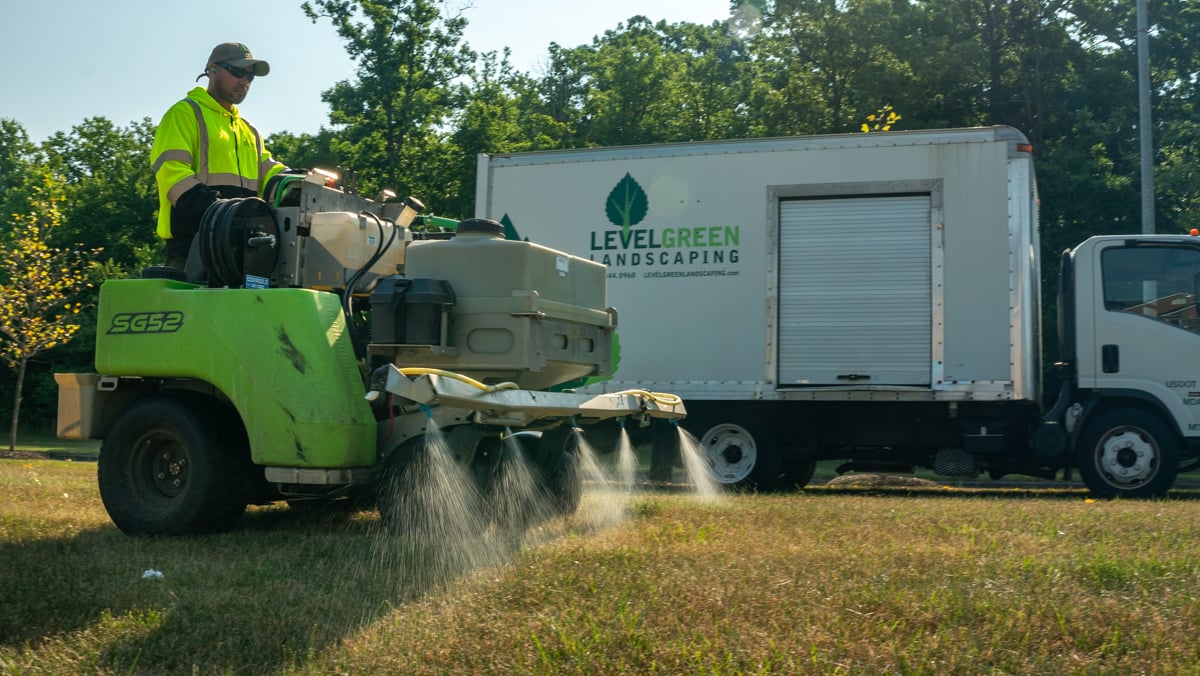
Meanwhile, we focus on strategies that encourage a thick, healthy lawn that naturally crowds out weeds, including:
Aeration and Overseeding
Aeration and overseeding in the spring and fall helps create a thick, healthy lawn that can naturally discourage weeds.
Aeration uses a machine to pull out tiny cores of soil from your lawn, allowing water and oxygen to get to the roots, so they can grow nice and deep.
It’s typically followed by overseeding, as those holes created by aeration provide the perfect home for grass seed.
The goal: you want grass filling in any empty spots, with new grass growing all the time. Thicker grass, fewer weeds.
That’s a better value for you than expensive organic weed control and a smarter way to achieve your commercial landscaping sustainability goals.

Proper Irrigation
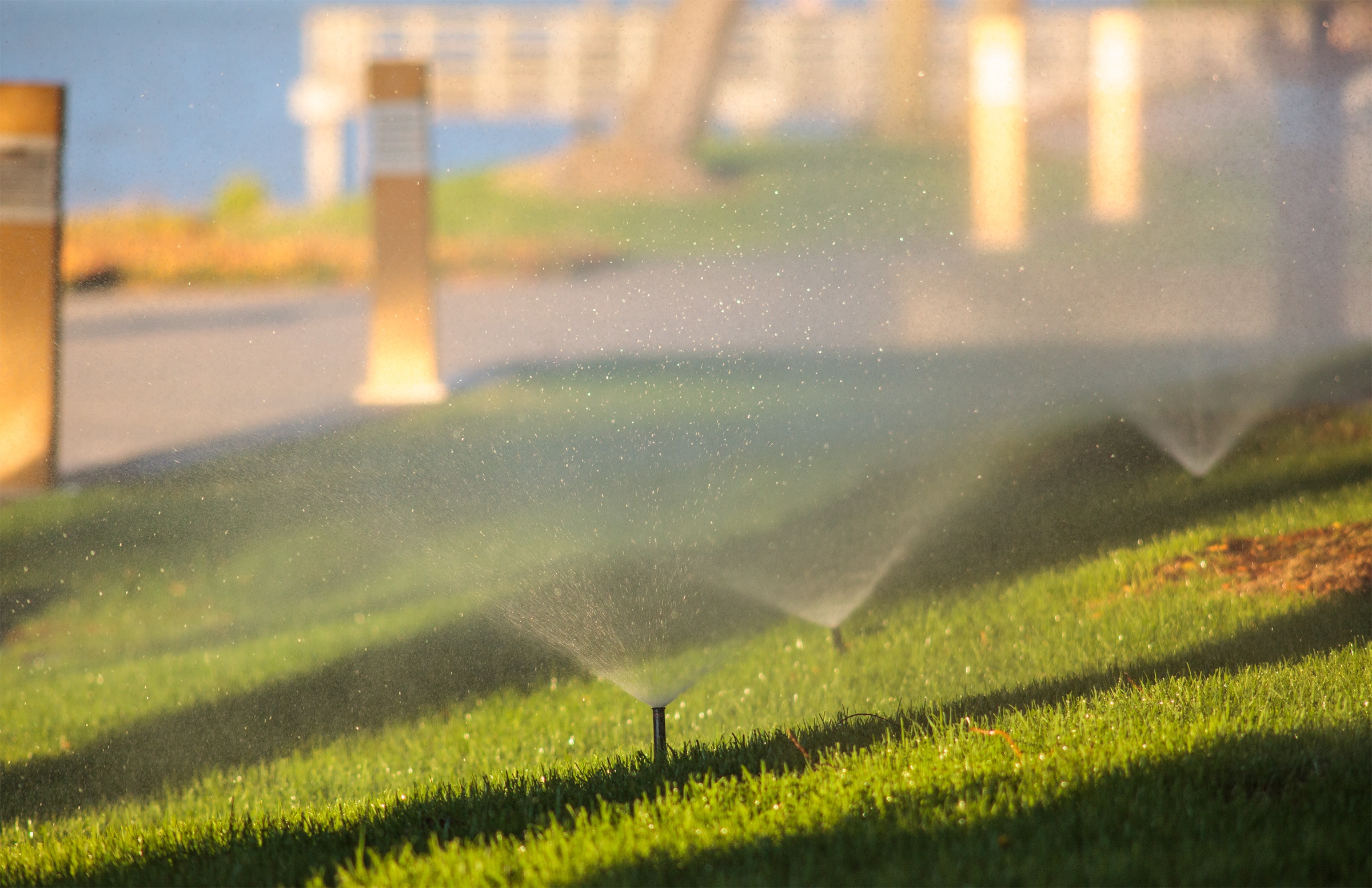
Deep root growth is another natural defense against weeds. That means longer, but less frequent watering.
Chances are, your irrigation controller is set to water three times a week for 20 minutes. Water less frequently but for longer periods to encourage your lawn’s roots to grow deeper.
Mow Taller
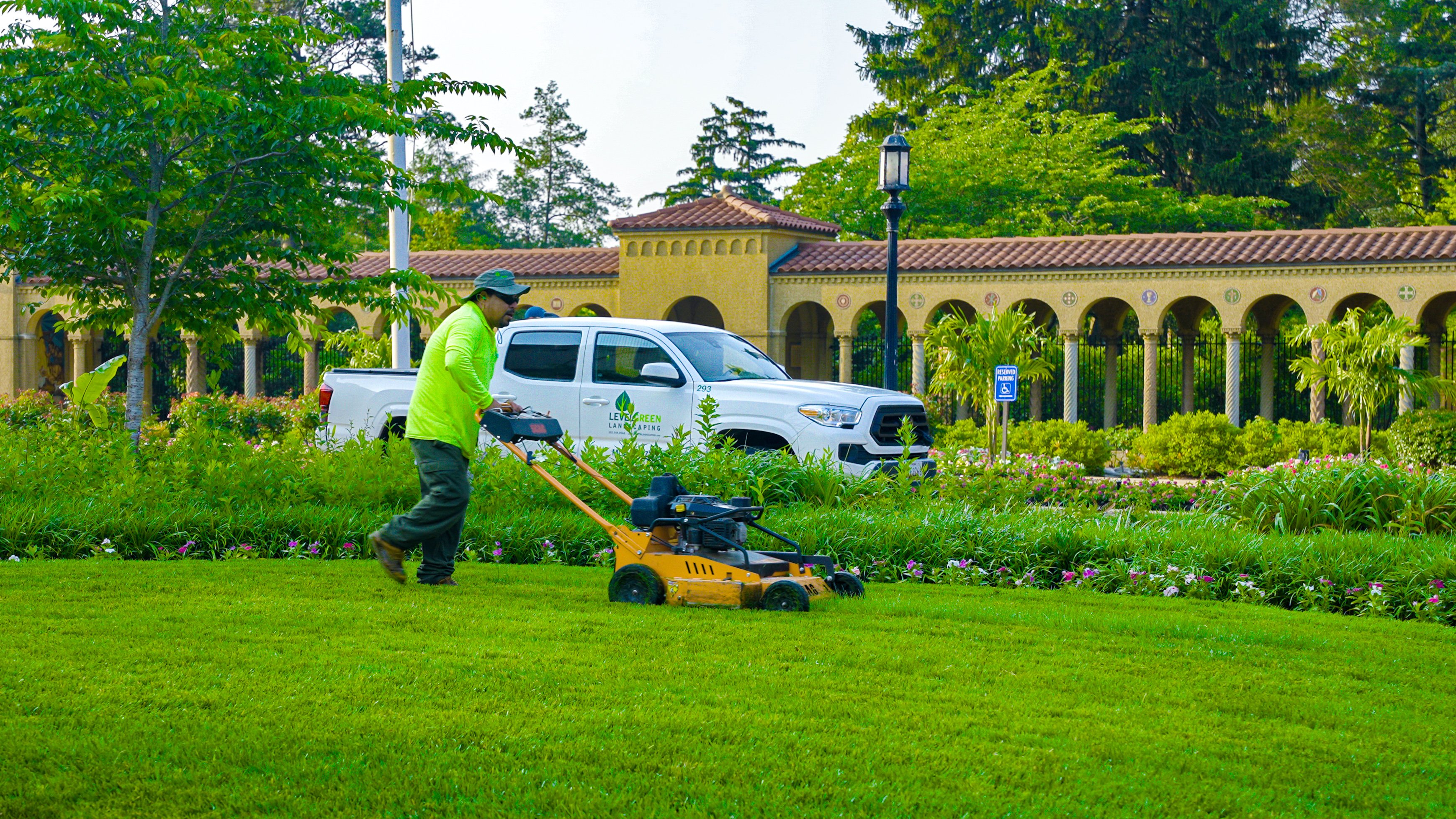
Cutting grass no shorter than 3-4 inches is more important than ever if you’re limiting chemical weed control.
Level Green crews know that taller grass helps shade weed seeds and keeps them from sprouting.
Add Organic Material
Level Green crews use mulching mowers to chop up fallen leaves whenever possible, creating free and beneficial organic material for your lawn.
The tiny bits of leaves fall down to the soil level where they’ll begin decomposing, acting as a natural fertilizer.
The bottom line: organic lawn care isn’t the only way, or the best way, to practice sustainable landscaping.
2. Using Outdated Irrigation
You might be wasting a lot of water without even realizing it if your irrigation system is older and outdated.
The latest landscape irrigation technology stops the waste, giving a real boost to your sustainable landscape maintenance.
Some of your irrigation system’s components can probably be swapped for new, more efficient ones. Updated sprayers use less water and spray water more efficiently. Your goal is to water your lawn and plants — not your sidewalks or parking lots.
Smart irrigation systems are the ultimate water savers.
Smart irrigation controls don’t start up your system just based on time of day. They can use local weather forecasts and your unique landscape conditions to tailor watering schedules perfect for your property.
Don’t worry about your watering schedule. Smart controls take care of it. They automatically adjust for weather changes, using as little water as possible while keeping your landscape healthy and happy. You can even make adjustments remotely from your smartphone.
If you’re hesitant to spend the money to upgrade your irrigation system, know this: you’ll get paid back pretty quickly from the money you save by conserving water and not needing frequent repairs.
/Misc.%20Photos/sprinkler%20head%20water%20irrigation.jpg?width=1280&height=885&name=sprinkler%20head%20water%20irrigation.jpg)
3. Installing a Green Roof — Then Ignoring Its Care
We see this mistake all the time. Green roofs are increasingly popular energy efficiency improvements for commercial buildings in Washington DC, Maryland and Virginia.
But green roof maintenance tends to get neglected.
Not all commercial green roofs are accessible to building residents or employees. Many are installed just for environmental reasons. Out of sight, out of mind.
But there are often thousands of plants up there, in hot sun and wind. They need plenty of maintenance, including:
- Water. Yes, the plants up there need irrigation. Even drought-tolerant plants like sedum can suffer in extreme drought. And all native plants need occasional irrigation for the first year or so until they get established.
- Weeds and invasive plants need to be removed regularly during the first 18 months and at least twice a year after plants are established.
- Drains should be inspected and any debris removed that’s blocking them. Water needs to drain properly to get the benefits of a green roof. Standing water can invite insects to breed.
- Do any plants need to be replaced or added? A commercial green roof should be at least 80% covered in plants.
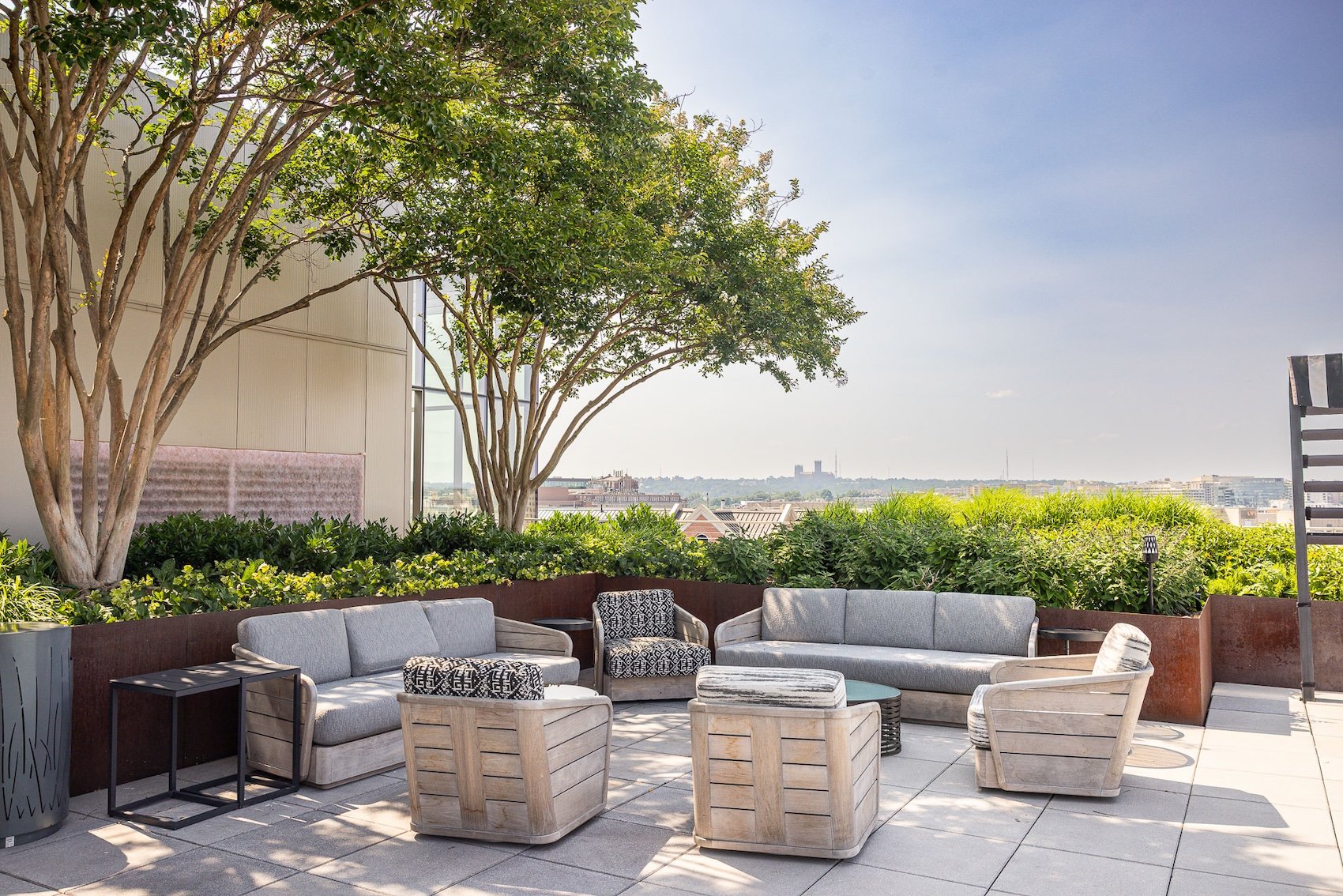
Other sustainable landscaping features need ongoing landscape maintenance, too, including rain gardens and stormwater ponds.
Weeds will quickly take over a rain garden and crowd out the plants without weed control. A stormwater pond can quickly become overgrown, and fail, if it isn’t regularly tended to by skilled landscape maintenance crews.
Which brings us to another commercial landscaping sustainability mistake…
4. Hiring Unqualified Crews to Maintain Your Stormwater Pond
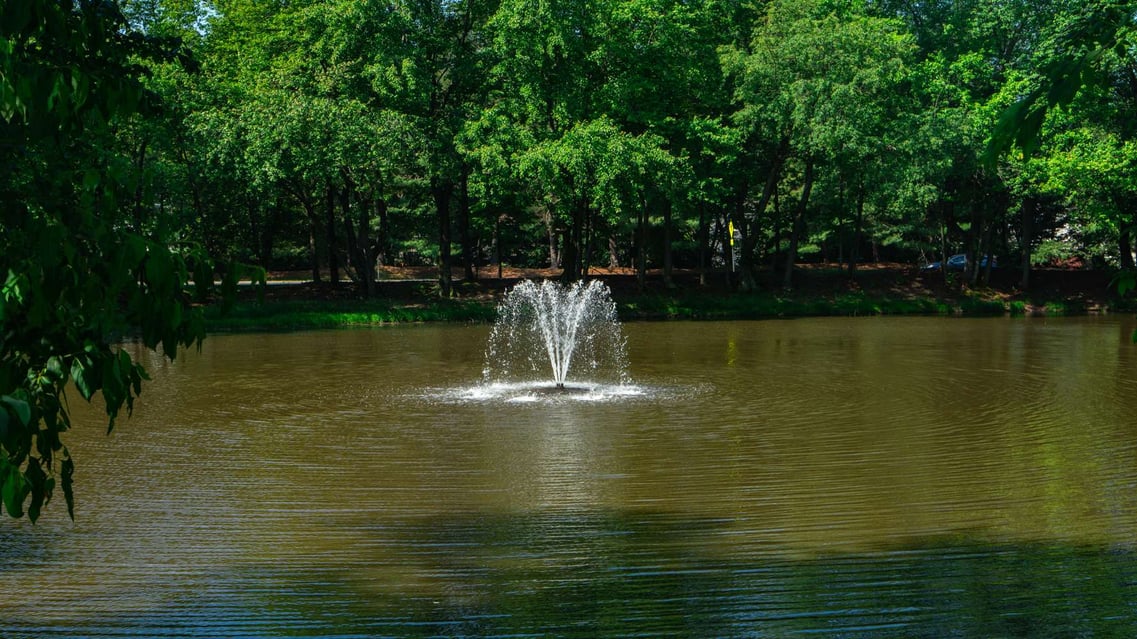
There’s security in knowing you have a retention basin or stormwater pond on your property.
The hardworking ponds collect water from rain and runoff and release it slowly, at a nice, easy rate that prevents flooding or erosion.
They’re sustainable landscape maintenance staples.
But is yours really working? Not without regular maintenance. If you neglect these stormwater management systems, they won’t drain properly. They get clogged. A tree could uproot and cause a weak spot in the embankment, causing the dam to fail.
But not all landscape maintenance crews know how to properly care for these important ponds, which means damaging stormwater runoff from your property’s pond could end up in area waterways, including the beautiful Chesapeake Bay.
Several Level Green team members are certified in professional landscape training designed to protect our waterways. Our goal is to have all our managers certified.
The landscaping certification is administered by the Chesapeake Conservation Landscaping Council, a non-profit dedicated to conservation landscaping to protect the Chesapeake Bay. The training teaches landscaping professionals how to avoid landscaping practices that are harmful to the environment.
The training includes both classroom instruction and field training. Participants visit retention and detention ponds and rain gardens, all designed to filter pollution from urban and suburban stormwater to keep pollutants from making their way into the Chesapeake Bay.
More and more HOAs and local governments concerned about commercial landscaping sustainability in Washington DC, Maryland and Virginia
are asking about the certification and in some cases requiring it of the eco-friendly landscaping companies they hire.
Municipalities want to make sure that retention and detention ponds don’t fail, so they conduct regular inspections of these ponds. Property owners face fines if the ponds aren’t working properly.
Are there signs of erosion around the pond banks? Are pipes clogged? Is there sediment buildup that needs to be cleared? Is there enough plant material? Plants help filter the water so pollutants don’t end up in the Chesapeake Bay.
When it’s time for your pond inspection, you want the security of knowing trained professionals have been maintaining your stormwater pond and ensuring it’s helping to protect the environment.
5. Forgetting That Sustainability Includes Snow Removal, Too
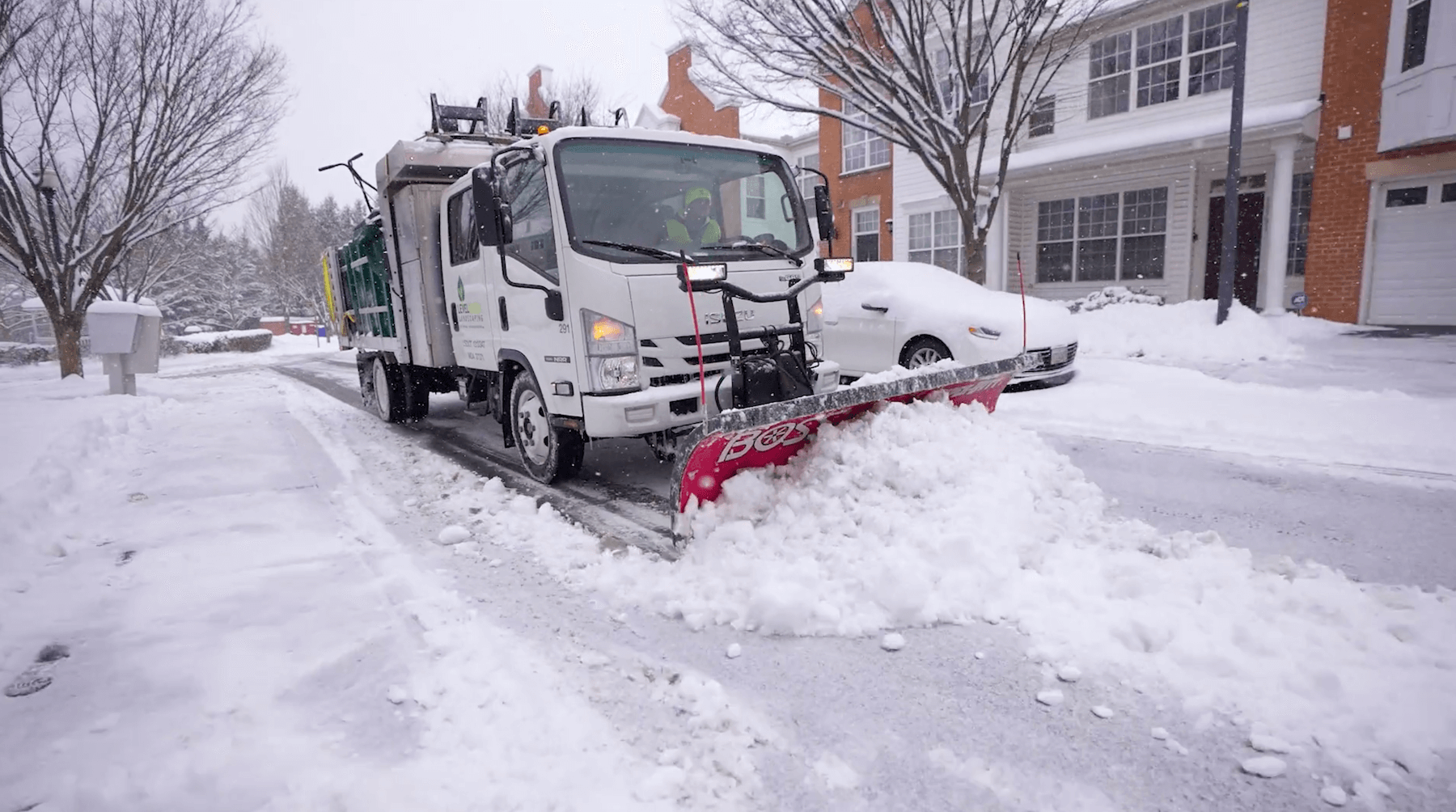
Sustainable landscape maintenance is an issue during the winter months, too. Or, it should be.
Is your snow and ice management company respecting the environment while they’re out there keeping your commercial property safe?
Are they limiting their use of damaging salt?
Rock salt has long been the standard solution for melting ice, but there are newer formulations today that do a better job with less harm to the environment.
Salt makes its way into area lakes and steams, creating a hostile environment for the crabs, fish and other creatures who live there. The environmental impact of too much salt is a big concern.
At Level Green, we limit our use of straight rock salt by using other methods, too, including an engineered ice melt mixture that’s less corrosive than straight salt and friendlier to the environment.
Level Green also uses brine as part of its de-icing strategy — a precisely-measured liquid mixture of water and salt that’s sprayed on roads, parking lots and walkways to prevent snow and ice from sticking.
Brine uses one quarter of the amount of salt as traditional rock salt, which means it’s much better for the environment.
Make sure your commercial landscaping sustainability efforts extend all year long.
Avoid Sustainable Landscape Maintenance Mistakes: Trust Level Green
Here at Level Green Landscaping, our livelihood depends on a healthy environment and our team members are nature lovers who care for the earth.
We know commercial landscaping sustainability is important to you, too. We’ll help you fix any mistakes on your property that interfere with your sustainability efforts, from updating your irrigation to providing expert, certified care for your stormwater ponds.
We know our customers appreciate our earth-friendly stance as we balance it with their desire for excellent landscaping.
Our expertise in constructing and maintaining conservation landscaping practices can help you ensure your property is doing its part to protect the precious environment.
If you’re not already a Level Green Landscaping client, we’d love to add you to our growing list of happy customers.
Our focus is on commercial properties like offices, mixed-use sites, HOAs, municipalities and institutions in Maryland, Washington DC and parts of Virginia.
Contact us at 202-544-0968. You can also request a free consultation online to meet with us one-on-one.
We’d love to hear from you.
Ready to get started?
Tell us more about your commercial property and how we can help you.


Douglass Delano
Doug Delano (and Bill Hardy) opened Level Green Landscaping LLC in 2002 to offer Washington DC, Maryland and Virginia reliable commercial landscape maintenance services.